Order Your Copy of A Crypto Evolution here
A Crypto Evolution Timeline
The Future of Finance How We Have Arrived Here in 2026

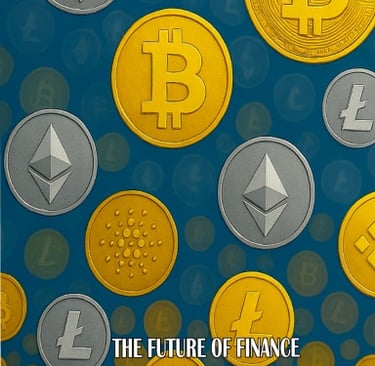
The evolution of cryptocurrency has progressed from early digital cash concepts beginning in the 1980s to a significant, global financial system integrating advanced technology and attracting institutional investment in todays world of 2026. The journey has been marked by technological breakthroughs, market volatility, and a maturing regulatory landscape that has recently taken place.
Early Concepts & Genesis (1980s-2009): The idea of digital money dates back to the 1980s with cryptographer David Chaum's eCash. In 2008, an anonymous individual or group, Satoshi Nakamoto, published the Bitcoin whitepaper, leading to the launch of the Bitcoin network in January 2009. This marked the birth of the first decentralized cryptocurrency, which solved the "double-spending" problem using a distributed ledger called the blockchain.
Rise of Altcoins & Early Adoption (2011-2014): As Bitcoin gained attention, alternative cryptocurrencies, or "altcoins," emerged. Litecoin and Ripple (XRP) were among the first, offering different features like faster transaction speeds. The first real-world transaction occurred in 2010 when 10,000 BTC were used to buy two pizzas, demonstrating its potential as a medium of exchange.
Ethereum and Smart Contracts (2015-2016): The launch of Ethereum in 2015 was a pivotal moment, introducing smart contracts—programmable agreements that automatically execute when conditions are met. This innovation paved the way for a vast ecosystem of decentralized applications (dApps) and the rise of the Initial Coin Offering (ICO) boom.
Mainstream Attention & DeFi Emergence (2017-2021):
2017: Bitcoin's price surged, reaching global attention and triggering a wave of speculative interest and new crypto projects.
2020-2021: The COVID-19 pandemic accelerated institutional adoption, with companies like Tesla and MicroStrategy adding Bitcoin to their balance sheets. Decentralized Finance (DeFi) emerged as a major trend, aiming to replicate traditional financial services without intermediaries. The NFT (non-fungible token) market also exploded, bringing digital art and collectibles to the mainstream.
Maturity, Regulation, & Integration (2022-Present):
2022: The market experienced a "crypto winter" marked by high-profile collapses like the Terra ecosystem and the FTX exchange, which underscored security risks and the need for regulation. The Ethereum network also transitioned to a more energy-efficient proof-of-stake consensus mechanism.
2024-2025- 2026: A major milestone in bridging traditional finance and crypto occurred with the U.S. Securities and Exchange Commission (SEC) approving spot Bitcoin and then spot Ethereum Exchange-Traded Funds (ETFs). Regulatory clarity has increased in several jurisdictions, encouraging more institutional participation. Concepts like real-world asset (RWA) tokenization and hybrid exchange models (CEX+DEX) are gaining prominence.
The industry has evolved from a niche, volatile experiment into a legitimate asset class that is increasingly integrated into the global financial system, with ongoing innovation in areas like AI integration and cross-chain functionality.
If you want to learn more about A Crypto Evolution click below to order the 288 page definitive guide to understand the evolution which has brought us here.
A Crypto Evolution Timeline
A Crypto Evolution
Explore how crypto transformed the U.S. currency landscape. Author John Nicholson of The Alternative Investments Center writes an easy to read book covering the evolution of crypto from an idea in the earliest days of the internet to what is potentially coming in the future as we transform further into the digital age of crypto.
info@acryptoevolution.com
© 2026. All rights reserved.
A Crypto Evolution
Alternative Investments Center
106 N Front St.
Phillipsburg Missouri 65722